


Loading...
Loading...
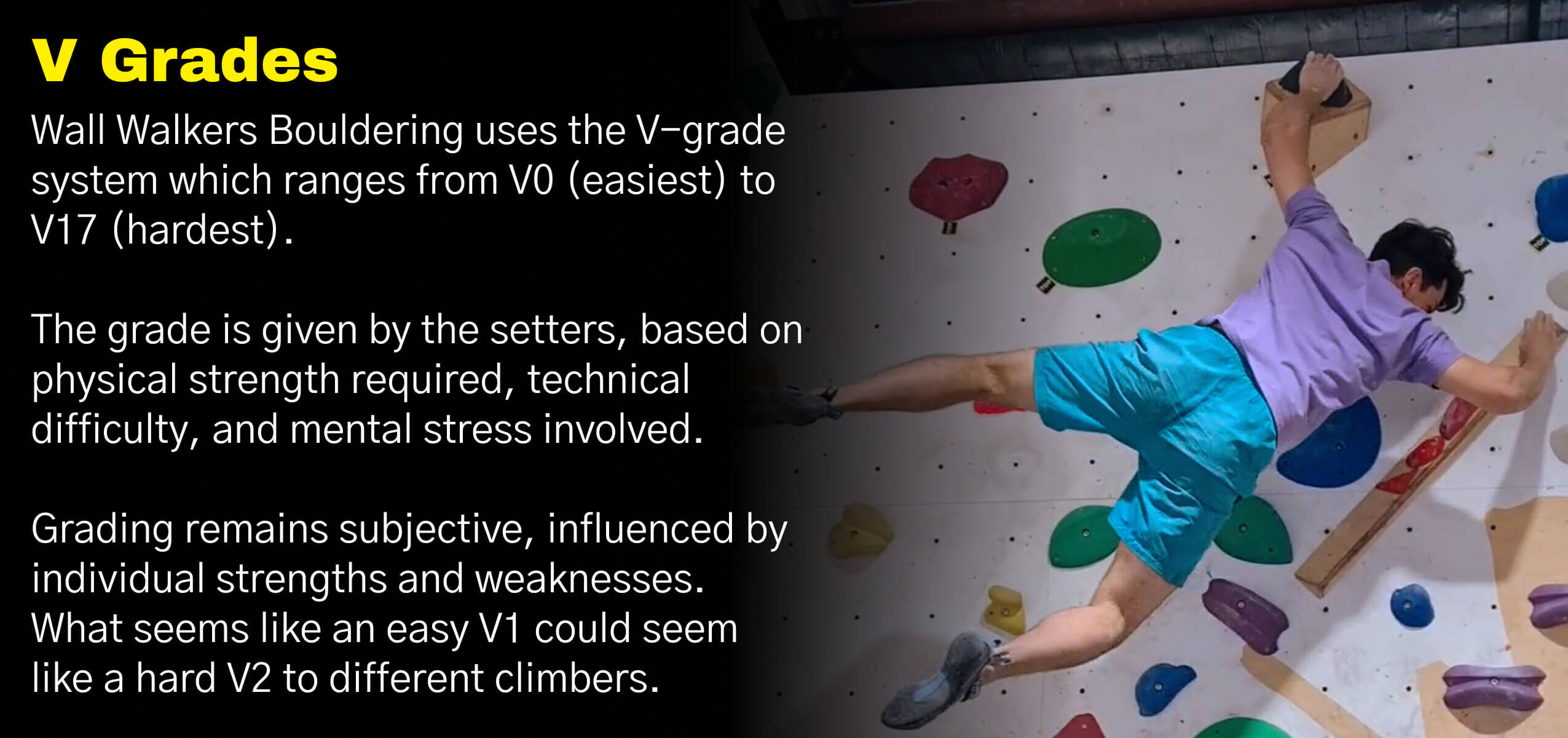
V grades help describe bouldering difficulty, but they are only part of the story. Strength, technique, body position, confidence, and style all affect how hard a climb feels.
Wall Walkers uses the V-grade system to describe the relative difficulty of our boulder problems. In general, the numbers go from easier to harder.
Great for learning the basics. Expect larger holds, simpler sequences, and movement that helps you build confidence on the wall.
This is where technique starts to matter more. Climbs may need better footwork, stronger body positioning, and more deliberate movement.
Harder problems often demand more strength, precision, commitment, and problem-solving. These climbs can be physical, technical, or both.
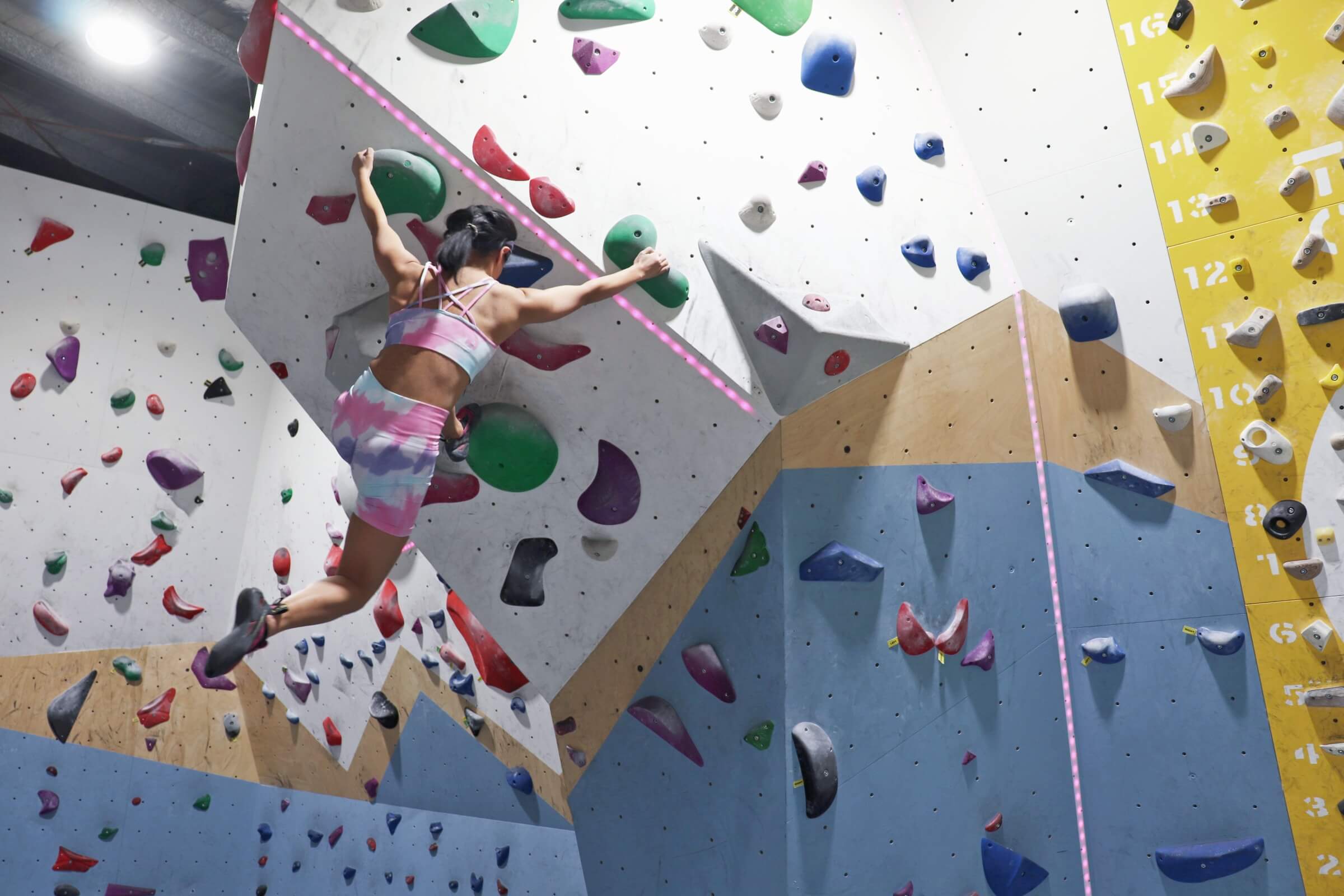
Difficulty explained
At Wall Walkers, a route may feel difficult for very different reasons. A climb can be physically demanding, technically complex, or mentally committing — and often it is a mix of all three.
More pulling power, body tension, finger strength, or explosive movement.
Footwork, body positioning, balance, precision, and solving the movement correctly.
Commitment, confidence, trusting your feet, and staying calm enough to try the move properly.
Body type, height, and reach
Strength, flexibility, and coordination
Preferred style — slab, vertical, overhang, powerful, or balancey
Confidence and willingness to commit to a move
Start on the easiest climbs and try a range of styles, not just one grade.
Expect overlap. Some V1s may feel easier to you than some V0s or V2s.
Use grades as guidance, not as a judgement of your ability or progress.
Progress includes better movement, confidence, and control — not just topping climbs.
The most common things new climbers want to know about route grades and difficulty.
Because grading is an estimate, not a precise science. Two climbs can share a grade while demanding very different strengths, techniques, or movement styles.
Start with the easiest problems available and try a range of them. The goal on day one is to learn how your body moves on the wall, not to chase numbers.
No. Try easier climbs to build confidence and movement quality, and try a few harder climbs to learn new skills. Both help you improve faster.
Not always. A harder grade might demand more strength, but it could also be more technical, more awkward, or more mentally committing.
The best way to understand grades is to get on the wall, try a few different climbs, and see how each style feels in your own body.