


Here's something I wish I'd understood when we opened Wall Walkers:
Some people aren't going to like your gym.
That sounds obvious now.
At the beginning, it wasn't.
One of the hardest things for me to deal with in our early years was people's perception of our size.
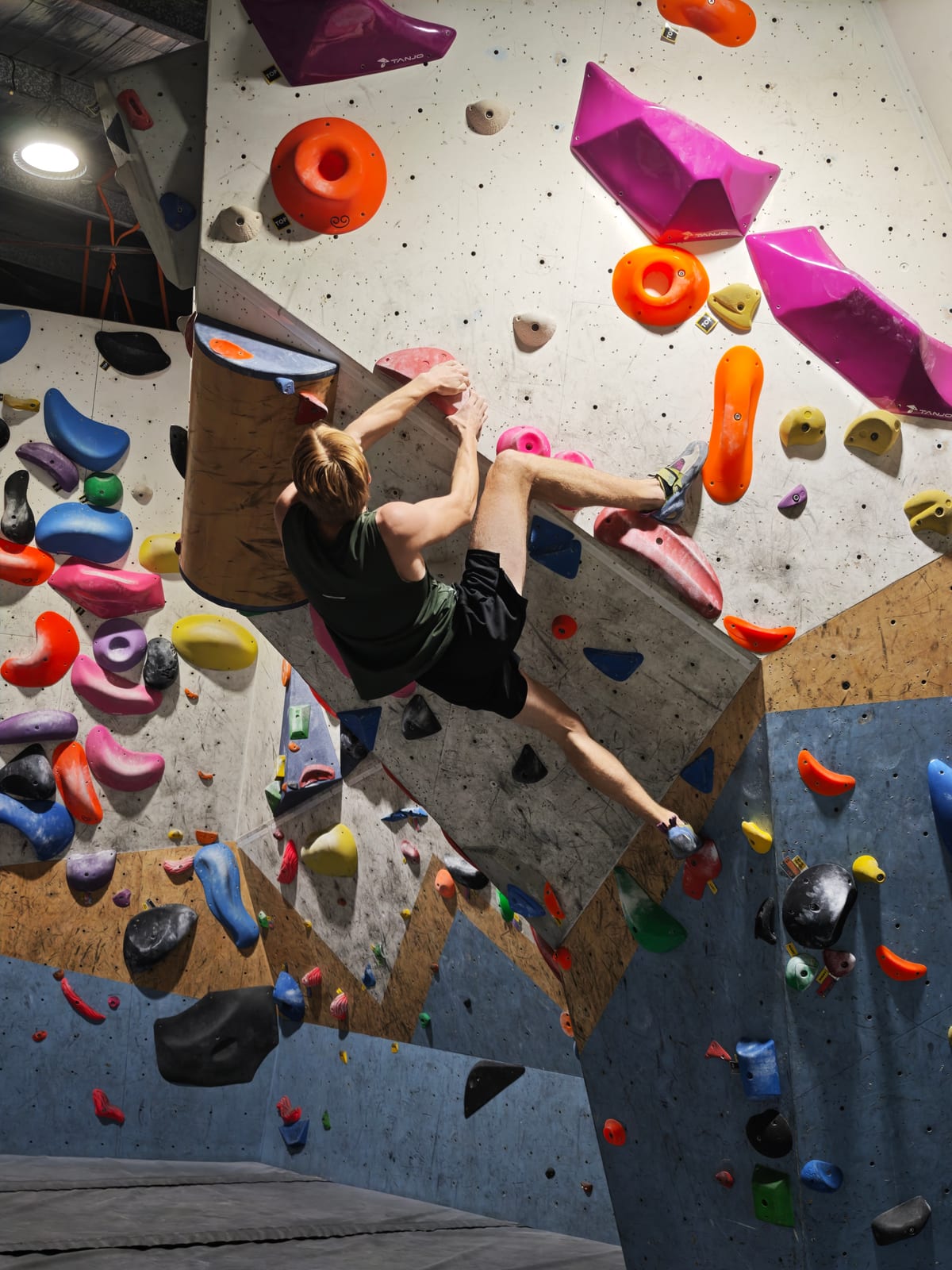
Wall Walkers is a small-format bouldering gym.
That's always been part of what we are.
But occasionally someone would arrive, look through the front door and seemingly make their decision before they'd even touched the wall.
"It's pretty small."
Sometimes they'd walk in, look around and leave.
Sometimes we'd hear someone messaging their friends suggesting they go somewhere bigger instead.
And honestly?
It used to really piss me off.
Because I knew what was actually on those walls.
I knew how much effort went into the route setting.
I knew how much climbing we'd managed to fit into the space.
I knew the investment we'd made in holds, equipment and facilities.
I knew the people who climbed here every week and genuinely enjoyed what we'd created.
But none of that mattered to someone who had already decided that bigger automatically meant better.
For a while, that bothered me more than it should have.
Over time, though, something changed.
Not necessarily them.
Me.
I realised we were trying to win over people who weren't necessarily our customers in the first place.
That's an important distinction.
Wall Walkers isn't trying to be a mega gym.
We've never pretended to be one.
There are enormous climbing facilities around Australia offering experiences that simply wouldn't make sense within our footprint.
They're good at what they do.
We're trying to be good at something different.
We want to create smaller climbing gyms that make intelligent use of their space.
We set densely.
We reset regularly.
We invest in our holds.
We focus heavily on the actual climbing.
And despite people's occasional assumptions about our size, in all the years we've been operating, I can count on one hand the number of people who've genuinely out-climbed everything available in the gym.
That's the funny part.
A gym can look small without the climbing experience actually being small.
It took me a while to become comfortable with that distinction.
It also took time for the business itself to give me the confidence to stop worrying so much about what everybody thought.
We've now operated Wall Walkers for years.
We've made mistakes.
We've adapted.
We've improved the facility.
We've changed the way we operate.
We've built technology.
We've grown our membership.
We've continued investing in the climbing.
And, importantly, the business has been able to sustain itself.
We didn't have to keep pouring money into it to keep the doors open.
It has supported itself and become increasingly profitable as we've refined the model.
I'm proud of that.
Not because it means we've somehow figured everything out.
We absolutely haven't.
I'm proud because businesses are hard.
Keeping one alive long enough to learn what works is an achievement in itself.
And the longer we've operated, the more comfortable I've become saying:
We're not for everyone.
That's okay.
In fact, I think that's an important part of understanding your market.
If somebody wants an enormous warehouse they can wander around for hours, there are fantastic gyms that provide exactly that.
If somebody wants a smaller, focused climbing space with challenging routes, regular resets, 24/7 access and a community of people who genuinely enjoy climbing, that's where Wall Walkers starts to make sense.
Neither model needs to be wrong for the other one to be right.
They're simply different.
That's something I think is particularly important as we start looking towards future Wall Walkers locations.
A smaller gym isn't automatically suitable for every location.
Just as a massive climbing facility isn't suitable for every location.
The market matters.
The community matters.
The building matters.
The economics matter.
Understanding who you're building for matters.
That's one of the lessons we've had to learn ourselves.
You can spend an enormous amount of time trying to convince everybody that your product is right for them.
More advertising.
More marketing.
More explaining.
More trying to change someone's mind.
Eventually, you realise that isn't the job.
The job is to build something genuinely valuable for the people who actually want what you're creating.
Listen to those people.
Understand them.
Keep improving for them.
And be comfortable with the fact that somebody else might walk past the front door and decide it's not for them.
Because no matter what you build...
Someone will find something wrong with it.
That's business.
The important thing is making sure enough of the right people find something right with it.
A Lesson We Didn't Expect
When we started Wall Walkers, criticism felt personal.
Over time, we learned to separate useful feedback from personal preference.
Useful feedback should make you stop and think.
It should challenge you.
Sometimes it should make you change what you're doing.
But somebody simply wanting a different product doesn't mean yours is broken.
Sometimes they're just not your customer.
Knowing the difference is incredibly important.
What I'd Tell Someone Starting Today
Some people aren't going to like what you build.
Accept that early.
You can spend all your time trying to make something that appeals to everybody and eventually create something that means very little to anyone.
Or you can understand your market, build something you're genuinely proud of, listen carefully to the people you serve and keep making it better.
You don't need everyone.
You need the right people.