


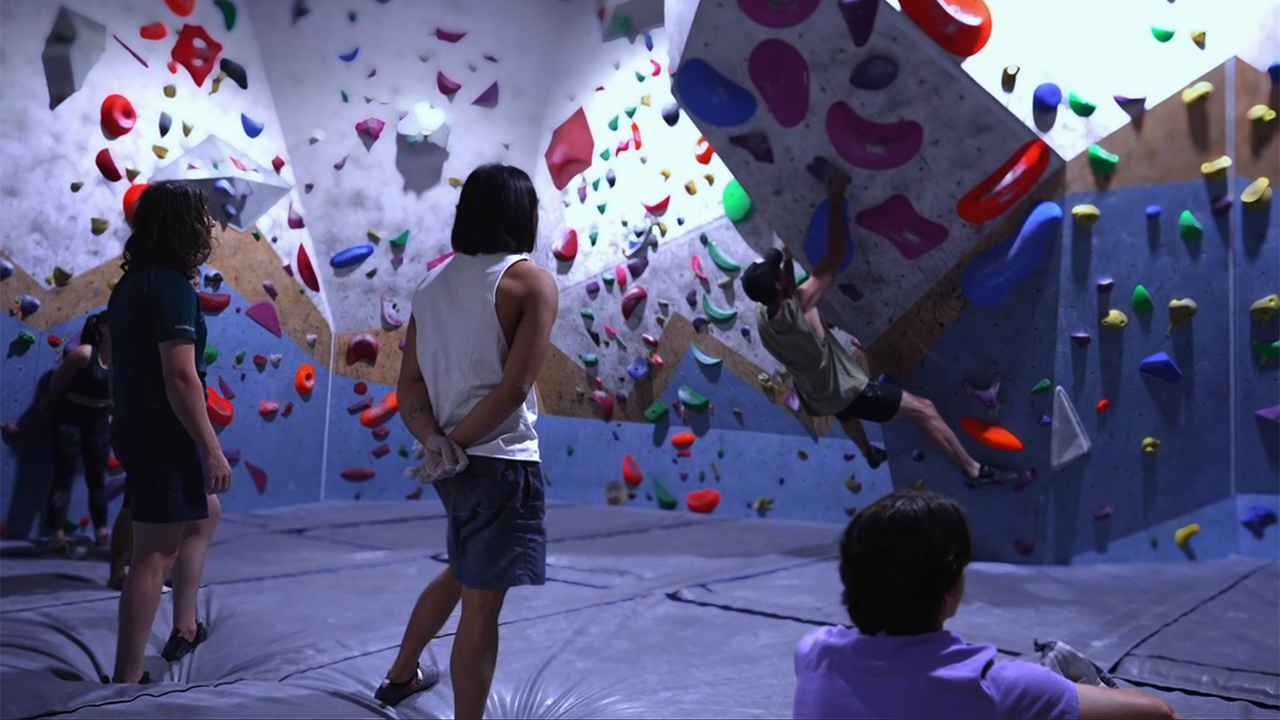
What is Bouldering?
Bouldering represents rock climbing performed without ropes on formations under 10 meters, emphasizing powerful, technical movements and problem-solving skills. Each climbing route (termed a "problem") demands a distinct combination of strength, balance, and technique.
Essential Equipment
Climbing Shoes
- Neutral, flat sole for comfort
- Adequate toe room to prevent cramping
- Sturdy rubber construction
- Hook-and-loop straps for convenience
- Avoid lace-up shoes for frequent on/off scenarios
Chalk and Chalk Bag
Chalk maintains hand dryness and grip quality. Key considerations include:
- Wide-opening bags for accessibility
- Both loose chalk and chalk balls (check gym regulations)
- Liquid chalk for humid conditions
- Brushes for hold cleaning
Crash Pads (Outdoor)
- Minimum 4-inch thickness
- Multi-folding sections for transport
- Proper placement technique knowledge
- Multiple pads recommended
Fundamental Techniques
Body Position Mastery
- Square hips: Wall-facing position
- Hip twist: Reaching distant holds
- Flagging: Free leg counterbalance
- Drop knee: Hip-into-wall stability
Movement Principles
Three progressive games enhance technique:
- Silent Feet: Deliberate, quiet foot placement with visual focus on target holds
- Straight Arms: Maintaining arm extension during rests, bending only when moving
- Center of Gravity: Keeping hips close to walls with smooth, deliberate movement
The 3-Second Rule
Climbers should assess the next move within 3 seconds to prevent over-analysis and conserve energy. However, good foot placement is crucial and shouldn't be rushed.
Grading Systems
Wall Walkers employs the V-scale system combined with color-coded holds:
- V Scale: V0-V16 (beginner-friendly at V0)
- Font Scale: 3-8c+ (European standard)
- Higher grades require advanced techniques (heel hooks, toe hooks, flagging, etc.)
Safety Practices
Spotting Fundamentals
- Keep arms raised with slight elbow bend
- Focus on protecting head and upper back
- Clear communication with climbing partner
- Never position directly beneath climber
Fall Technique
- Land on both feet
- Bend knees for impact absorption
- Roll backward after landing
- Avoid arm-catching attempts
Injury Prevention
Warm-up Routine (15-20 minutes)
- Light cardio: 5 minutes
- Dynamic stretches: 5-10 minutes
- Easy climbing: 5-10 minutes
Conditioning Exercises
- Dead hangs
- Core work (planks, hollow body holds)
- Antagonist training (push-ups, reverse wrist curls)
- Flexibility work
- Pull-ups
Common Beginner Mistakes
- Over-gripping holds
- Climbing with bent arms
- Neglecting footwork
- Attempting excessive difficulty levels
- Skipping warm-ups
- Insufficient rest between attempts
Recovery and Progress
Maintain a climbing journal tracking completed problems, improvement areas, and rest days. Recovery protocol suggests at least 48 hours between hard sessions and emphasizes listening to body signals.